Why Is Your Windscreen Leaking Water When It Rains?

Rao Hasnain • November 8, 2026

Share this article

Windscreen Chip or Crack? When to Repair and When to Replace in Sydney's Eastern Suburbs

It rains, and by the time you're back in the car, there's a damp patch on the carpet near your feet, or the footwell smells faintly musty even after the sun's come out again. Most drivers assume the worst, a leaking roof, a failed door seal, something expensive. Often, the actual source is much closer to eye level: the windscreen itself, or more precisely, the seal around it.


A leaking windscreen doesn't usually announce itself with an obvious drip. It shows up as a wet patch that appears after rain and slowly dries out, a musty smell that never quite goes away, or fogged-up windows that take longer than usual to clear. Understanding why it happens is the first step to actually fixing it, rather than mopping up the same damp carpet every time it rains.

Why a Windscreen Leaks in the First Place

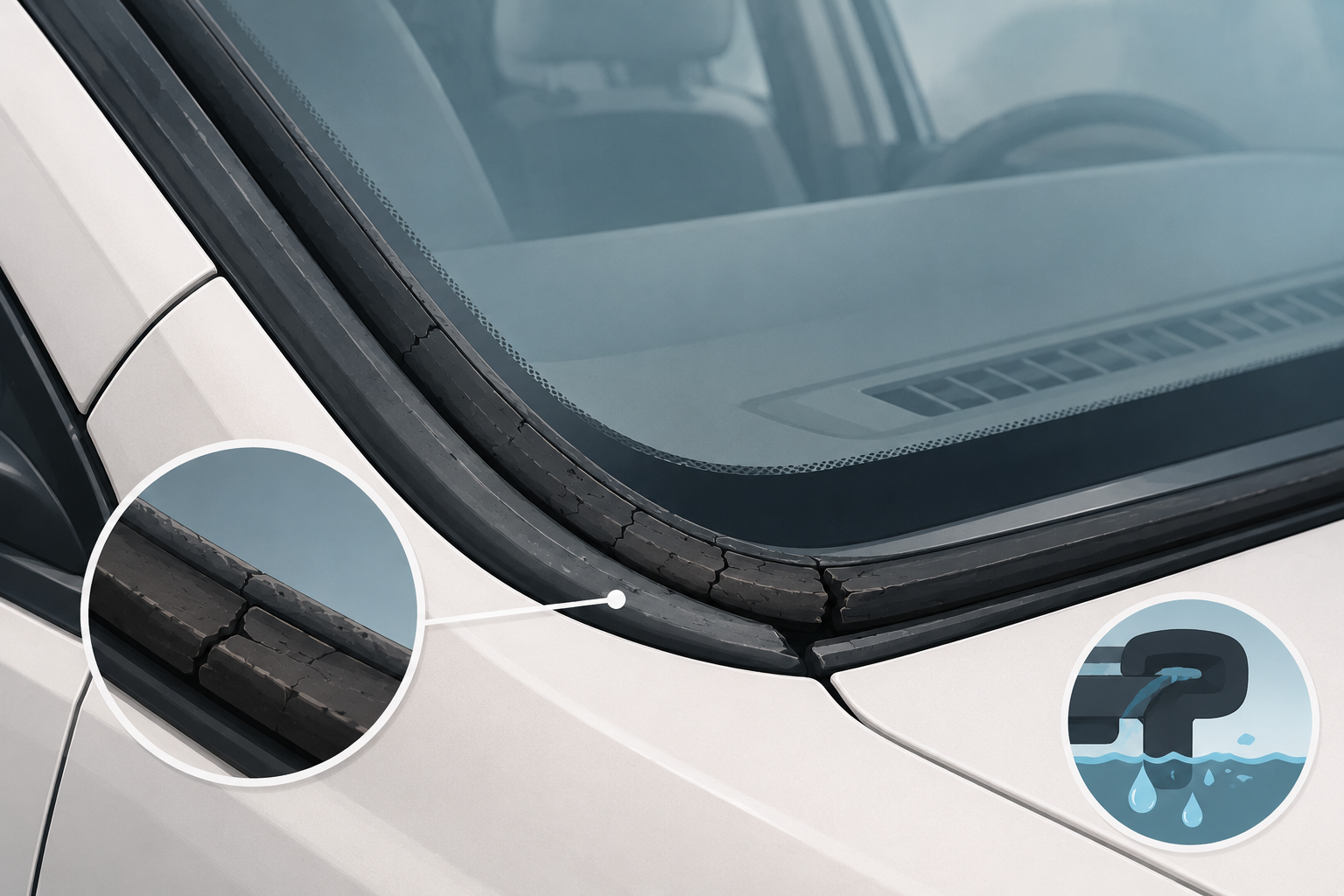
A windscreen isn't just glass dropped into an opening. It's bonded into place with a structural urethane adhesive and sits against a rubber or moulded seal that's meant to keep water out entirely. When that seal fails, even slightly, rainwater finds the gap and works its way in, usually along the path of least resistance rather than straight down in an obvious line.


A few things cause that seal to fail:


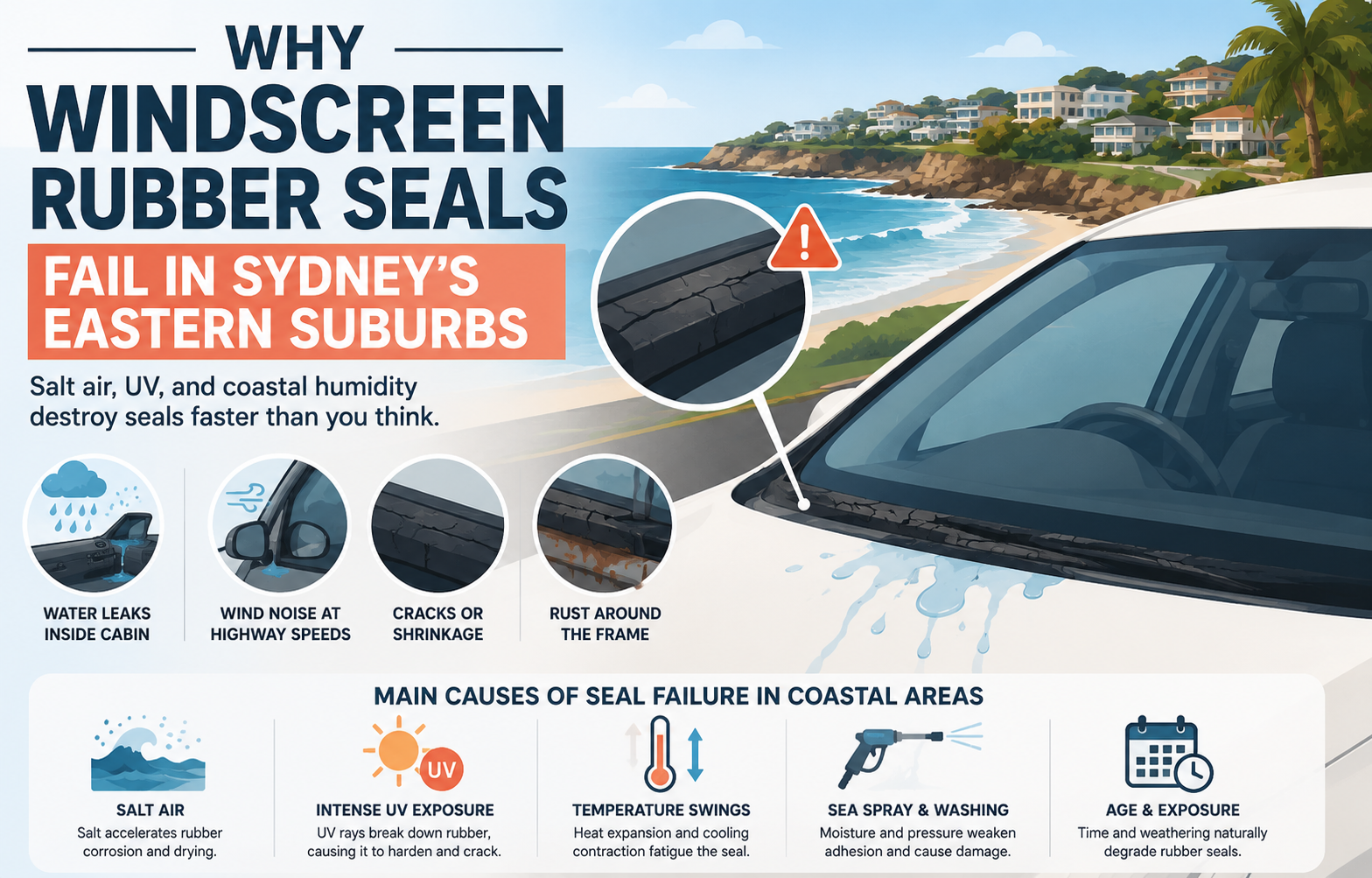
Perished or cracked rubber seals. Rubber degrades over time, and in Sydney's Eastern Suburbs, coastal salt air and constant UV exposure accelerate that process considerably compared to inland areas. A seal that's gone hard, brittle, or visibly cracked has lost the flexibility it needs to keep water out.


A poor original installation. If the windscreen was fitted with an uneven adhesive bead, a contaminated bonding surface, or without enough care around the edges, it may never have sealed properly in the first place, sometimes leaking from day one, sometimes only once the adhesive ages and shrinks slightly.


Damage to the glass itself. A crack that reaches the edge of the windscreen can act as a channel for water, letting it track along the crack and in through the frame, especially during heavy rain.


A previous chip repair that wasn't done properly. Resin injected into a chip is meant to seal it completely. A repair done with substandard resin, or one that didn't fully cure, can leave a tiny path for water to seep in around the damaged area.


Corrosion around the pinch weld. The metal frame the windscreen bonds to can develop surface rust over time, particularly in coastal conditions, and rust under the seal prevents a clean, watertight bond even if the seal itself looks fine.


Blocked cowl or plenum drains. This one isn't strictly a windscreen seal issue, but it's often mistaken for one. Leaves and debris can block the drainage channels at the base of the windscreen, causing water to pool and back up into the cabin instead of draining away as designed.

Why It's Worse for Coastal Eastern Suburbs Vehicles

Cars parked near the water in Bondi, Coogee, Rose Bay, or anywhere else along the Eastern Suburbs coastline deal with a specific combination that inland vehicles largely avoid: salt-laden air, high humidity, and consistently strong UV exposure. All three accelerate rubber degradation, and all three speed up any corrosion starting to form around the windscreen frame. A seal that might last comfortably for a decade inland can show real signs of wear years earlier on a car that spends its life a few streets back from the beach.


Not Every Leak Is Actually the Windscreen


Before assuming the windscreen is to blame, it's worth ruling out a few common look-alikes, since the fix is completely different for each:


  • Sunroof drain overflow, which can present as water dripping from the headliner or pooling near the A-pillars rather than the base of the windscreen
  • Door seal failure, usually showing up as wet carpet closer to the door sill than the dash
  • Blocked air conditioning drain, which typically causes water to pool under the passenger side dash rather than near the windscreen itself
  • A leaking cowl or bonnet seal, letting water in around the wiper mechanism area rather than through the glass seal proper


Where the water actually shows up, and how quickly after rain starts, is a useful clue, but a proper inspection is the only reliable way to confirm the source rather than guessing and re-treating the wrong spot.

Why Ignoring It Costs More Than the Fix

A slow windscreen leak feels like a minor annoyance, damp carpet, an odd smell, but left unaddressed it causes problems that go well beyond a soggy footwell.


Mould and mildew. Trapped moisture in carpet and underlay is exactly the environment mould needs, and once it takes hold, the smell tends to return no matter how often you air the car out.


Electrical issues. Many vehicles route wiring and control modules under the dash and around the footwell area. Persistent moisture here can lead to corrosion on connectors and, in worse cases, genuine electrical faults.


Rust on the floor pan. Water sitting under carpet for extended periods can eventually start corroding the metal floor beneath it, a much more expensive problem than the seal that let the water in to begin with.


Fogged or misting windows. Trapped cabin moisture doesn't just sit in the carpet, it evaporates and condenses on the glass, making the fogging problem worse every time it rains rather than better.

Reseal or Replace? What Actually Fixes It

Not every windscreen leak needs a full replacement, but the right fix depends on what's actually causing it.


A rubber reseal is usually enough when:


  • The glass itself is undamaged
  • The leak is isolated to one section of the seal rather than widespread
  • There's no significant corrosion around the frame
  • The windscreen was correctly installed originally and has simply aged


A full replacement is usually the better call when:


  • The original installation was poor and the adhesive bond itself is compromised
  • There's a crack in the glass contributing to the leak
  • Corrosion around the pinch weld needs to be properly treated before a new seal will hold
  • Multiple previous reseal attempts haven't resolved the issue


A technician who actually inspects the seal, the glass, and the surrounding frame can tell you which category your car falls into, rather than defaulting to the most expensive option.

What To Do If You've Noticed a Leak

  • Note where the water appears and how soon after rain starts, since this genuinely helps narrow down the cause
  • Check for visible cracks or gaps in the rubber seal around the windscreen edge
  • Don't just keep drying the carpet out without addressing the source, since trapped moisture under carpet accelerates mould growth even between rain events
  • Get it assessed before the next heavy rain, particularly if you've noticed the smell getting worse or the damp patch growing

Frequently Asked Questions

How do I know if it's my windscreen leaking and not something else?

Where the water shows up is a useful first clue, water near the dash and footwell close to the windscreen often points to the seal, while water nearer the door sill or headliner usually points elsewhere. A proper inspection is the only way to confirm it.


Can a windscreen leak be fixed without replacing the whole glass? 

Often, yes. If the glass itself is undamaged and the leak is due to a perished or poorly fitted seal, a rubber reseal service can resolve it without a full replacement.


Why does my windscreen only seem to leak sometimes?

This is common with minor seal degradation, since the leak may only show up during heavy or sustained rain, or when the car is parked at a particular angle that lets water pool against the weak point in the seal.


Is a windscreen leak covered by insurance?

This depends on your policy. Some comprehensive policies cover windscreen-related repairs including resealing, particularly if the leak is linked to a chip or crack. It's worth checking with your insurer directly.


Does salt air really make windscreen seals fail faster?

Yes. Coastal salt exposure and consistent UV are genuinely harder on rubber seals and metal window frames than inland conditions, which is why leaks and corrosion tend to show up earlier on vehicles regularly parked near the coast.


Will a leak get worse if I ignore it?

 Generally, yes. A small, intermittent leak today can become a more consistent one as the seal continues to degrade, and the longer moisture sits in the carpet and underlay, the more likely mould, odour, and eventually rust become genuine problems.

A windscreen leak is rarely dramatic, it's a slow, easy-to-ignore problem that shows up as damp carpet or a musty smell rather than an obvious drip. But the cause is almost always identifiable, a perished seal, a poor original installation, or damage to the glass itself, and each has a fix that doesn't need to involve guesswork.


Eastern Suburbs Windscreens provides mobile windscreen inspection, resealing, and replacement across Bondi, Randwick, Maroubra, Rose Bay, Paddington, Woollahra, Bondi Junction, and surrounding suburbs. If your car's been smelling musty after rain, it's worth getting the actual source checked before it becomes a bigger problem than the seal that started it.

Recent Posts

Windscreen Damage Affect Your Driving Visibility
By Rao Hasnain • November 17, 2026
Chips, cracks and pitting can blur your view, cause glare and hide hazards. Here's how windscreen damage affects visibility and what to do about it.
By Rao Hasnain • November 8, 2026
How Do You Know If a Windscreen Has Been Installed Incorrectly?
windscreen replacement
By Rao Hasnain • August 31, 2026
A stable chip during the day can turn into a long crack by morning. Here's the science behind overnight windscreen cracking and how to stop it
Cracked Windscreen Pink Slip Inspection
By Rao Hasnain • August 31, 2026
A cracked windscreen can fail your NSW pink slip, but not always. Here's how inspectors judge chip size, location, and when repair beats replacement.
windscreen rubber seal failing Eastern Suburbs
By Rao Hasnain • July 1, 2026
Salt air, UV, and coastal humidity destroy windscreen rubber seals faster than most drivers realise. Here's what to look for and what to do about it.
windscreen replacement costs in Sydney
By Rao Hasnain • June 7, 2026
Get accurate windscreen replacement costs in Sydney's Eastern Suburbs, including ADAS calibration, OEM glass, insurance, and mobile service.
Windscreen Chip or Crack? Here's Exactly When to Repair and When to Replace
By Rao Hasnain • April 1, 2026
A small chip on the Eastern Distributor can become a $400 replacement. Heres when your windscreen can be repaired and when it can't explained clearly